
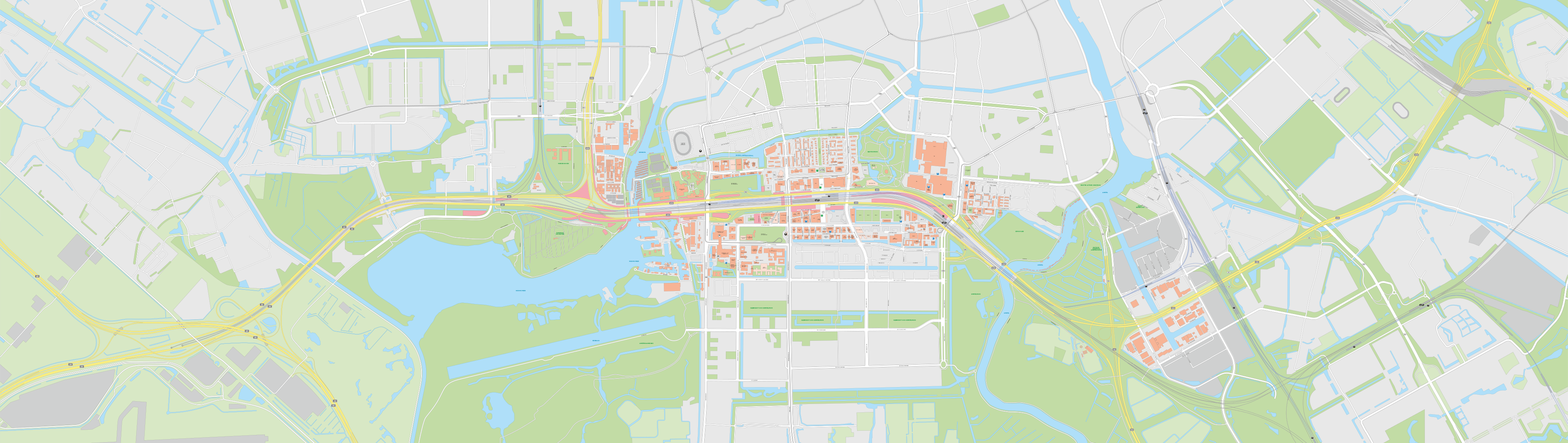
After another 30 m or so of digging, the future Brittenpassage will break through into the former Atrium garage, on the north side of Amsterdam Zuid station. This handshake between south and north is currently still being prevented by some sheet piling and a metro track in its path. In the summer of 2024, we will be taking the most northerly metro track out of use for a seven-week period, so that this obstacle can also be removed. Planning engineer Ivanka Schutrups from the Nieuw-Zuid Construction Consortium (Mobilis, Boskalis, Van Gelder) escorts us into the tunnel as trains, metros and cars speed towards their destination above our heads.
This far and no further
A slight smell of sulphur wafts towards us as we walk into the tunnel from Arnold Schönberglaan, on the south side of the station. ‘That’s caused by the welding that needs to be done here and there, including on the foundation piles for the passageway floor’, says Schutrups. We walk past a group of men in orange overalls and safety helmets. After 70 m or so, we encounter a sheet pile wall tens of metres wide and metres in height. Schutrups explains that, just behind it, not visible from our position, there is another sheet pile wall in the ground: ‘Together, they form a type of box, or cofferdam, with a wall of earth over 6 m high between the sheet pile walls on which the metro track is located. This is the last major obstacle between us and the end of the tunnel. The only other thing in the way is the Atrium garage sheet piling.’
Removal of metro track and cofferdam
The northern metro track, used by metros 50 and 51 in the direction of Isolatorweg, will be removed this summer. We will then lower the ground in the cofferdam to the same level as the ground around it – around 3 m above where the passageway floor will be. The top of the cofferdam will then be exposed and, during the weekend of Saturday, 13 July, we will pull all of the sheet piles out of the ground. To make that possible, the A10 in the direction of A4 Schiphol/The Hague will be closed for two days. So, why don’t we just dig the ground to the same level as the future passageway floor now? Schutrups: ‘If we do, there’s a chance that the structure will collapse, including the crane we’ll use to remove the cofferdam.’
Horizontal anchor rods
Horizontal anchor rods have been drilled through the cofferdam. On both sides of the structure, these are bolted to large steel purlins. This contains the earth within the cofferdam, improving the stability of the ground underneath the metro track. In order to remove the rods, we will put a drilling rig in the Atrium garage. The job is far from easy: the drill needs to go through the garage wall first. After that, the drill will hover in the air for a few metres before it ultimately reaches the rods on the cofferdam. We used the same method to install the rods. But removing them this way has never been done before.
Transition structures
‘On both sides of the tunnel, we’re building a transition structure’, continues Schutrups, ‘to make it possible for us to connect the new metro deck to the rest of the track later on without problems.’ On the west side of Parnassusweg, there will be a simple, load-bearing transition plate. However, on the east side, the track runs across an area with important installations, including for electricity – the junction box. Schutrups: ‘It’s actually a concrete container, with a watertight space for the sprinkler system and an extra sturdy roof. A special plate will be placed on top of this to absorb all of the forces from the traffic on the metro.’
Moving the final roof section into position
When the cofferdam and track have been removed, the tunnel will be free of obstacles all the way to the A10, says Schutrups: ‘We will then put the metro track back. The track will be slightly further to the north than before, on top of the seventh and final roof section of the Brittenpassage. The roof section is already ready and waiting on our work site between the metro tracks. Along the length of the tunnel, we are installing two rows of supports with runners on top of them. We will then use hydraulic jacks to push the roof section into position, just like we did on the other side of the passageway in August of last year.’
Putting the metro track back
Approximately halfway through the seven weeks of work on Amsterdam Zuid station this summer, we will push the roof section into its position. In the final week, the metro track will go on top of that. Just before that, around 18 months of digging will reach a symbolic climax. Schutrups: ‘Then we’ll remove the sheet piling from the Atrium garage and the breakthrough will be complete.’
Brittenpassage
By 2027 at the latest, around 200 m away from the existing Minervapassage an additional, 130 m long passenger tunnel will open: the Brittenpassage. When you pass through the gates with your public transport chip card or bank pass, you will enter the modern station passageway with an internal bicycle park across two floors (with room for 2,600 bikes) and various retail outlets for shopping. Of course, you will be able to access the platforms by stairs, escalator or lift and there will be a desk for the purchase of your public transport tickets.
Share article:
Give your opinion
Get in touch with us